
Full & Low Water Tank Alarm Project Using BJT ⚡💧
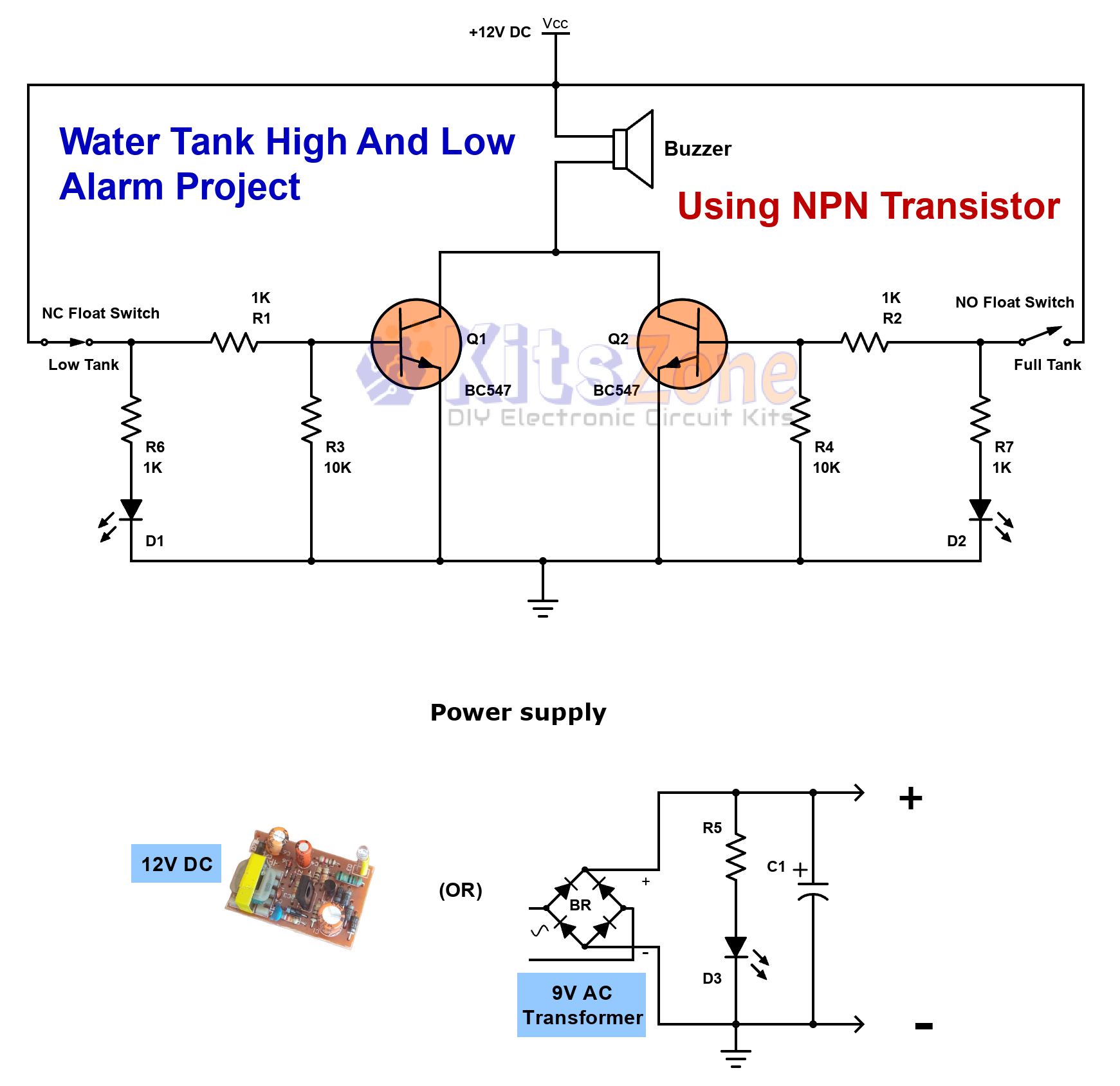
Managing water levels in overhead and underground tanks is essential to avoid wastage, motor damage, and inconvenience. A Full and Low Water Tank Alarm using BJT transistors is a simple yet effective mini electronics project for students and beginners. This project not only teaches the basics of transistor switching circuits but also provides hands-on experience in designing a practical water level monitoring system. With the help of NPN transistors (BC547) and float switches, this circuit alerts users whenever the tank is full or running low on water. Perfect for electronics learners, this project builds foundational skills in circuit design, logic gates, and real-life applications. 🔋💡
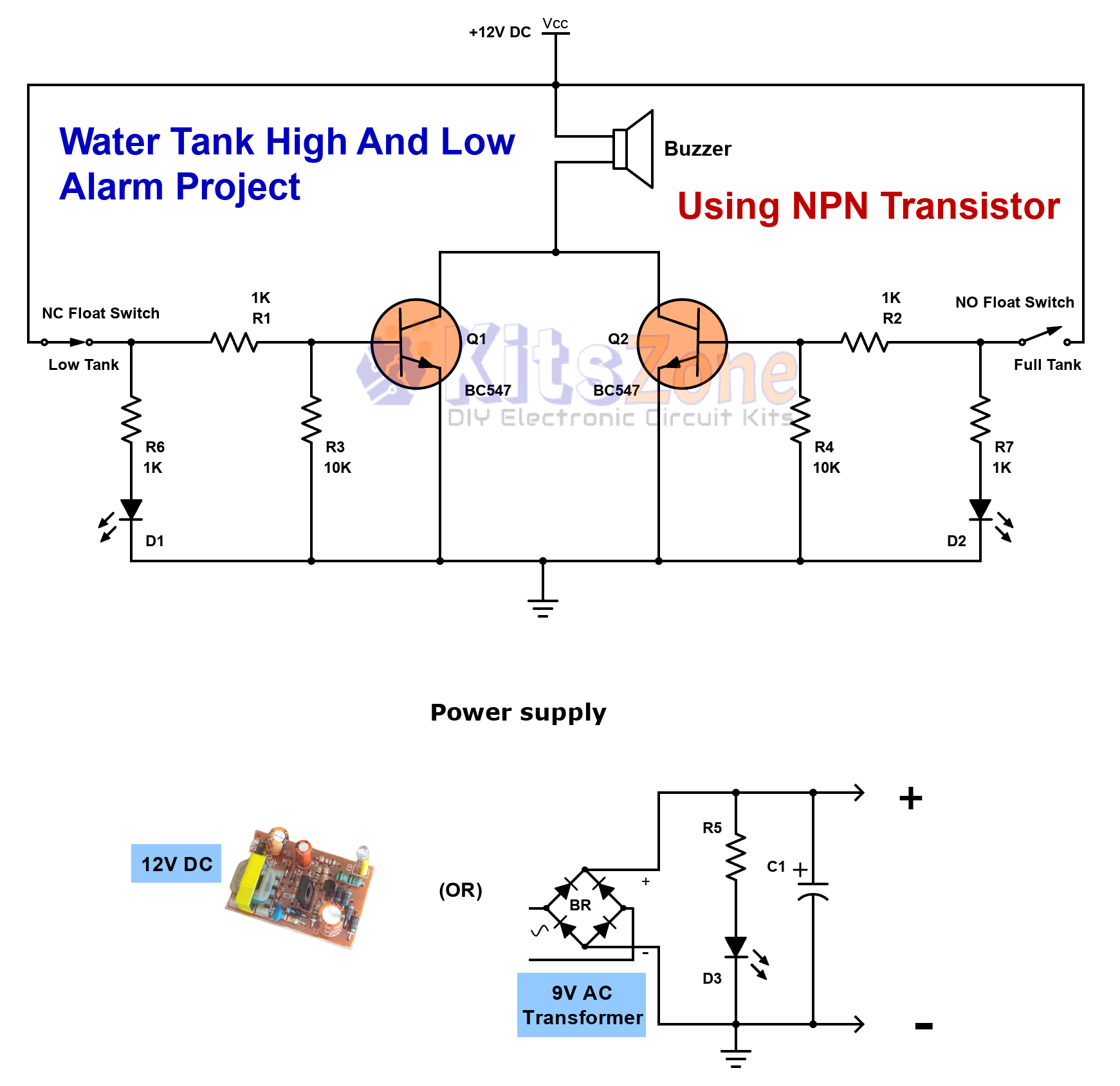
Parts Required 🧰
Resistors
- R1, R2 → 1K Ω
- R6, R7 → 1K Ω
- R3, R4 → 10K Ω
Transistors
- Q1, Q2 → BC547 (NPN)
Indicators
- Buzzer → 12V continuous or intermittent
- LED → D1, D2 (any color)
Float Switches
- Normally Closed (NC)
- Normally Open (NO)
Power Supply
- 12V SMPS or 9V Step-down Transformer
If Transformer is used:
- BR → W04/W10/DB107 (Bridge Rectifier)
- R5 → 1K (¼W)
- C1 → 470µF, 16V
- D1 → LED
Circuit Working ⚙️
The water level alarm uses two transistors (Q1 & Q2) configured as an OR logic gate:
- Low Tank Condition (NC Float Switch)
- When water drops below the set level, the NC float switch closes, applying a positive voltage to the base of Q1.
- Q1 turns ON, activating the buzzer 🔔 and LED D1.
- Full Tank Condition (NO Float Switch)
- When water reaches the top level, the NO float switch closes, giving a positive signal to the base of Q2.
- Q2 switches ON, triggering the buzzer 🔔 and LED D2.
👉 This ensures an alarm whenever the water tank is either empty or overflowing, preventing damage and wastage.
In the above circuit design, users are required to manually turn off the device whenever the alarm is triggered, and then turn it back on later to continue monitoring the tank level. This process is cumbersome and represents a significant drawback, making the circuit suitable only for project purposes and not for commercial use. However, by incorporating a momentary switch to silence the alarm without the need to power down the entire device, we can overcome this drawback. Here is a circuit to overcome this drawback and it can be used commercially as well.
Conclusion 🎯
The Full & Low Water Tank Alarm Project using BJT transistors is a beginner-friendly DIY electronics project that teaches transistor switching, float switch operation, and circuit logic. While it is ideal for learning and demonstration, with minor improvements, it can also be adapted for real-world water management applications in homes and industries. 🌍💦
You should also read:
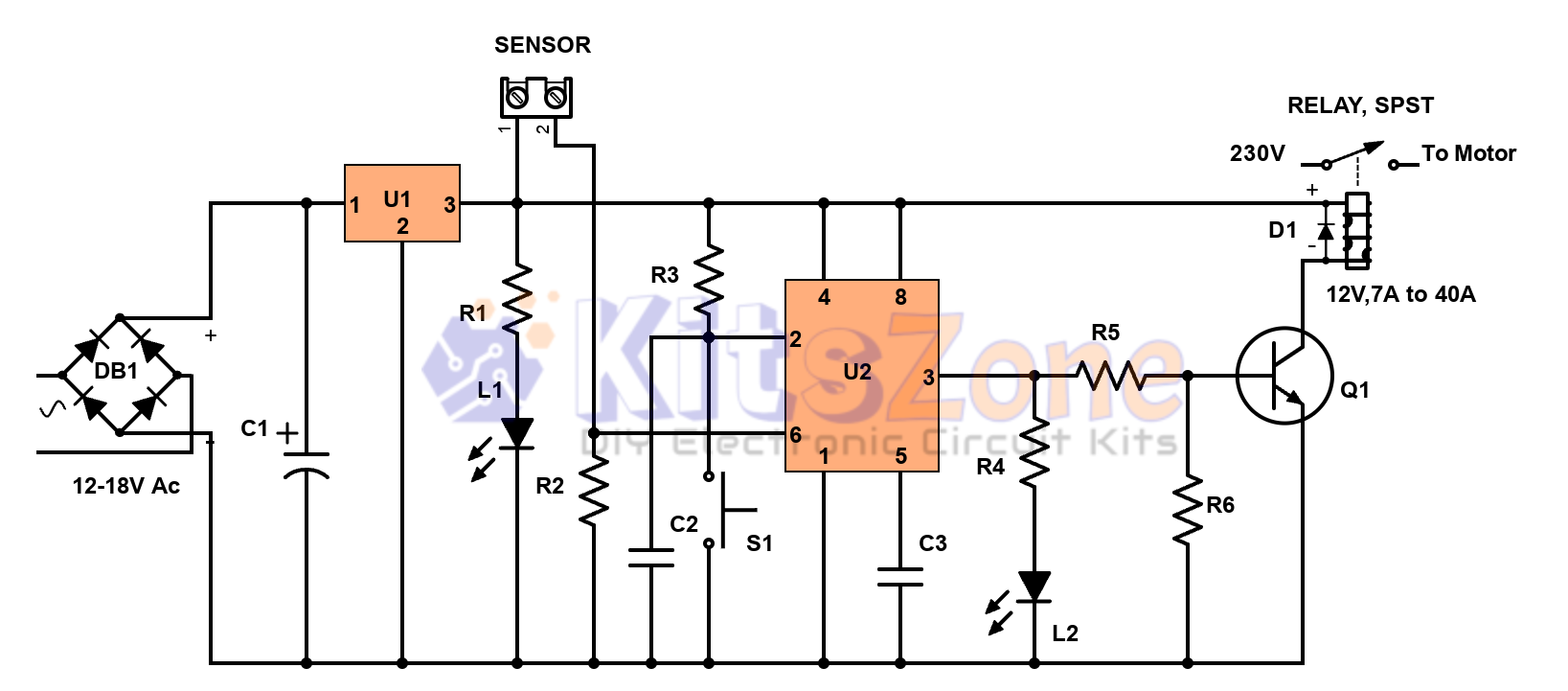
Semi-Automatic Water Level Controller Circuit Using 555 Timer
Managing water efficiently is crucial to avoid wastage and overflow 🚰. A semi-automatic water level controller circuit using a 555 timer IC provides a simple yet effective solution for controlling water pumps. This project not only prevents tank overflow but also reduces manual effort. By using a 555…
Continue reading...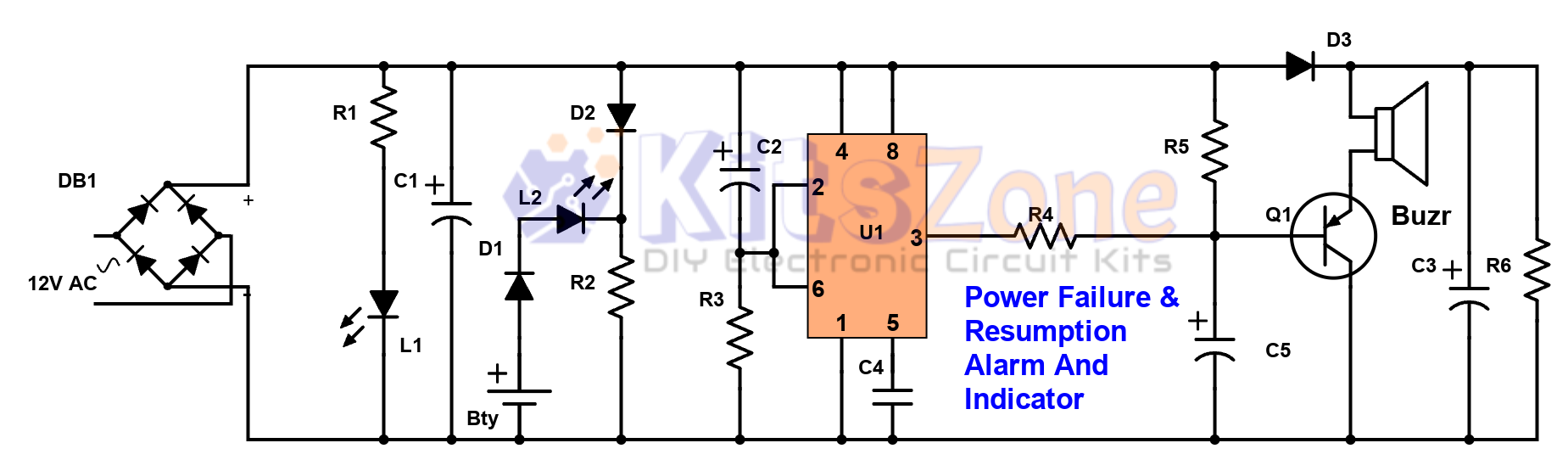
Power Failure and Resumption Alarm Circuit using 555 IC
⚡ Power cuts can cause inconvenience, equipment damage, and even safety risks. That’s why a Power Failure and Resumption Alarm Circuit using 555 Timer IC is a simple yet powerful solution! This DIY electronics project not only alerts you when electricity goes off but also notifies you…
Continue reading...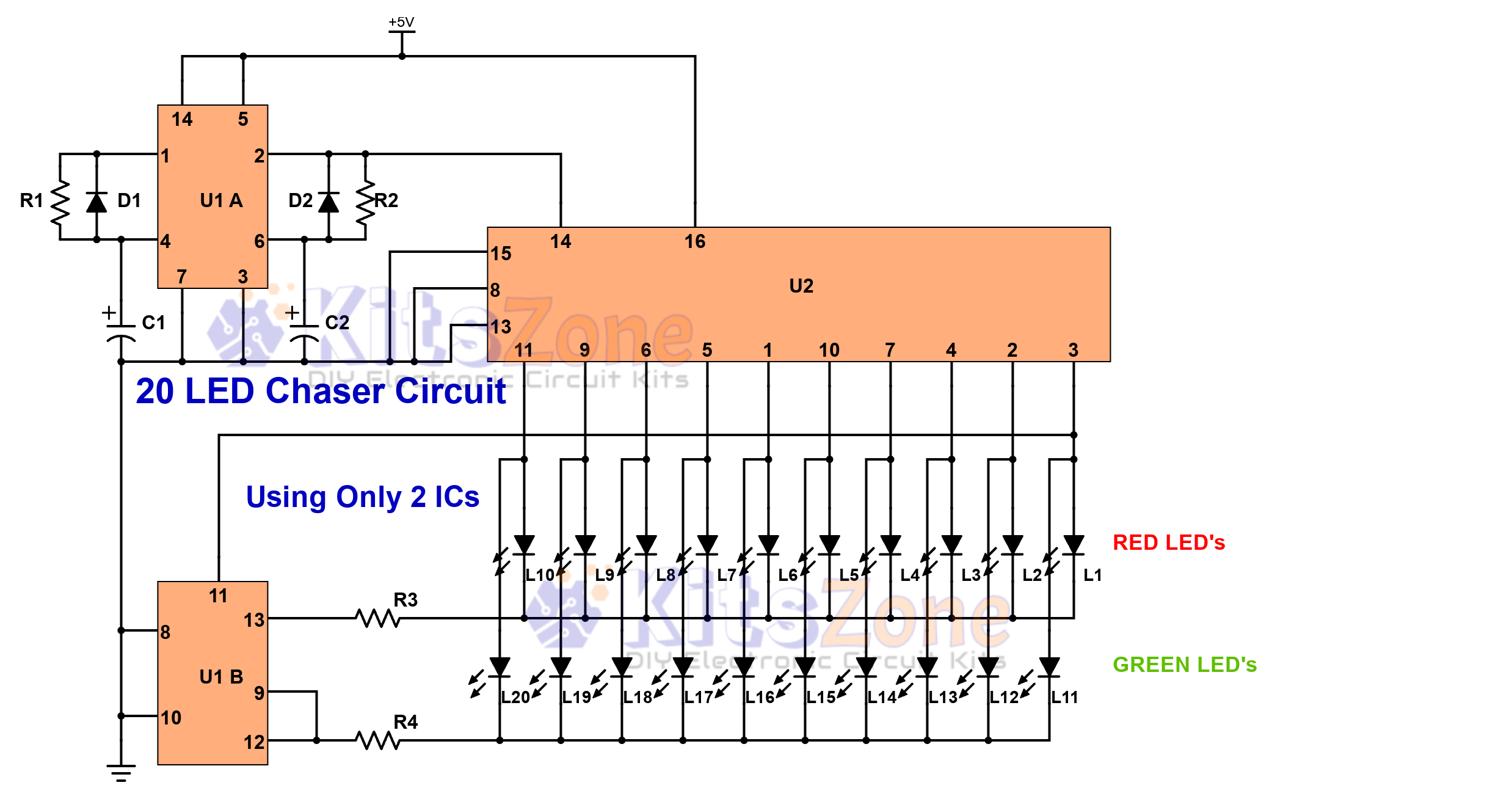
Light Chaser Circuit Using Cd4017 And Cd4013
Looking for a fun and easy electronics project? 🤔 A 20 LED chaser circuit Using Cd4017 And Cd4013 is a perfect DIY project for beginners and hobbyists. Instead of the commonly used 555 timer, this project uses CD4017 (decade counter IC) and CD4013 (dual flip-flop IC) to create a smooth light…
Continue reading...